
Shri Bahadur Singh: A Teacher, Guide, And Lifelong Learner
A teacher himself, he now mentors other teachers to strengthen foundational learning among children
In the valley of Solan, Himachal Pradesh, there is a government centre primary school where one man has quietly become a force of change.
Shri Bahadur Singh (55) is a teacher who has dedicated more than two decades of his life to this school.
But he is more than a teacher. His role extends beyond moulding young minds; he wears multiple hats: centre head teacher, mentor, and pillar of support for children.
For years, Bahadur Singh did what so many dedicated teachers do: be a steady presence for his students. He taught, he repeated lessons, he stayed late. And yet, he noticed some children from Grade 1 and 2 continue to struggle with writing letters and recognising numbers. Observing their difficulties, he realised the need for a change in the teaching approach.
In 2024, as a centre head teacher, he was called to attend a mentoring workshop conducted by the Samagra Shiksha Himachal Pradesh, in collaboration with Pratham Education Foundation.
In 2022, the Government of Himachal Pradesh and Pratham collaborated to implement NIPUN Himachal, an initiative aimed at building strong foundations in literacy and numeracy for children by Grade 3. As an implementing partner, Pratham works directly on the ground, supporting teachers and training mentors to strengthen Foundational Literacy and Numeracy (FLN) across the state.
In one of these workshops, he learned about spot assessment, a tool used to understand exactly where a child stands in their learning journey. Could they recognise a letter, read a word, or work through a basic problem?
He also learned about different play-based activities that can be used to strengthen foundational learning in children.
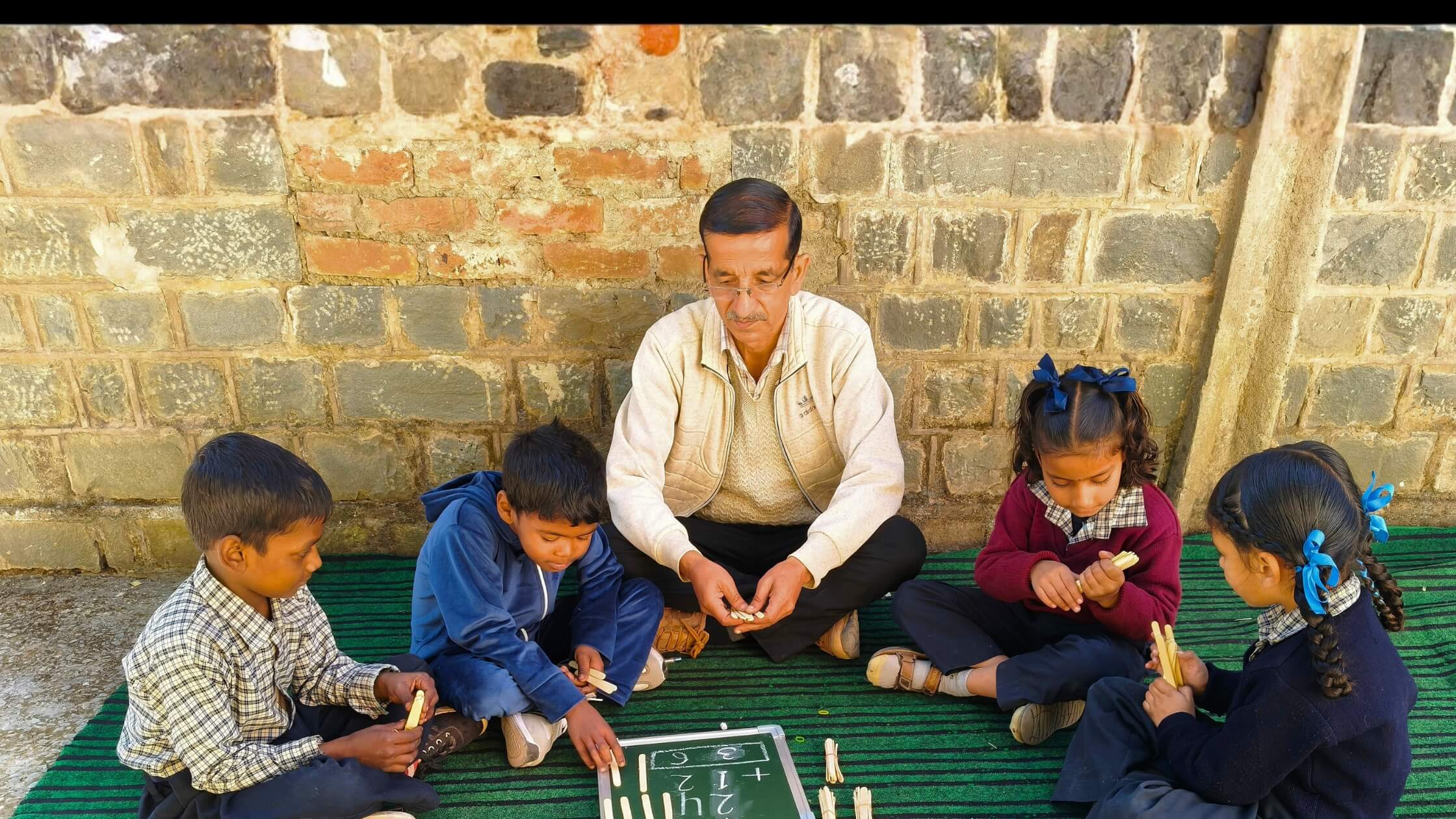
With new tools and a renewed sense of purpose, he returned to his school as a confident mentor. In classrooms, he demonstrated hands-on maths activities that made lessons engaging, helping children learn through simple, interactive exercises.
His visits were no longer just formal check-ins; they became opportunities to understand real concerns.
And something slowly shifted in the classrooms.
Teachers observed that some children who had hesitated to participate had started raising their hands. For him, this was a moment of happiness, not just that children were learning better, but that teachers were able to implement the new tools in the classroom.
With continued support from Pratham, he carries this work forward, strengthening mentoring and learning at the same time.