
When people talk about bold solutions, they often imagine something new, complex, and high-tech. But what if the boldest solution is… simple?
At Pratham, we’ve spent decades working on a problem that affects over 250 million children globally—children who go to school but don’t learn to read or do basic math. They move from grade to grade, invisible in plain sight, without the skills they need to build a better future.
For an effective solution, we didn’t have to start by inventing a new app or a digital platform. Instead, we turned to something deceptively simple: start where the child is.
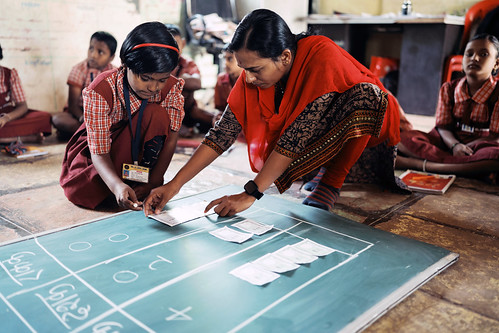
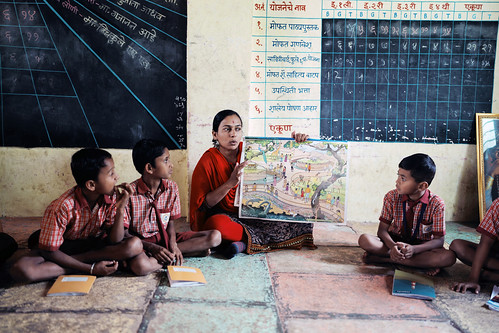
Our approach, called Teaching at the Right Level (TaRL), begins by asking a basic question: what does this child know today and what’s the next step in their learning journey? We group children based on their actual learning levels (not their age or grade), and then teach foundational skills using interactive, targeted methods. It works. And we have two decades of data, not to mention millions of transformed lives, to prove it.
The beauty of TaRL is in its simplicity and adaptability. It doesn’t require expensive infrastructure or new textbooks. It fits into existing school systems. It’s flexible enough to work in urban India, rural Zambia, or a classroom in Honduras. And it works because it changes the fundamental interaction at the heart of education: how a child is seen, understood, and supported by their teacher.
In a world that often equates boldness with complexity, we’ve learned that simplicity is sometimes the most radical choice.
That’s not to say it’s easy. Simple does not mean shallow. Delivering TaRL at scale requires thoughtful training, coaching, feedback loops, and deep partnership with governments. It means aligning with national priorities, working through existing structures, and supporting the middle tier of the system—the education officers and mentors who drive change day to day.
But the method itself remains focused. Clear. Grounded in evidence. And deeply human.
The global learning crisis is urgent but our response doesn’t have to be flashy to be transformative. It has to be workable, and it has to work.
If we want to see real change in education, we may need to shift our mindset. Innovation isn’t always about creating something new. Sometimes it’s about returning to the fundamentals and doing them well, with humility, precision, and scale.
That’s our vision. A world where every child, regardless of where they’re born, learns the skills they need to thrive because the system sees them, supports them, and starts where they are.
– Manushi Yadav, Director of Strategy and Partnerships, Pratham
PS: This write-up has been published in its original form without any editing or alterations. Any grammatical errors, typos, or stylistic variations are preserved to maintain the authenticity of the author’s work. The views and opinions expressed here are those of the individual authors and do not reflect the views or positions of the organisation.